What "marine collagen" actually means
Marine collagen is the term for hydrolysed Type I collagen peptides sourced from fish — typically the skin and scales of wild-caught or sustainably farmed species. Hydrolysis is an enzymatic process that breaks the long collagen protein chain into short bioactive peptides between 2,000 and 5,000 daltons. That low molecular weight is what allows the peptides to cross the gut wall, enter the bloodstream and signal to fibroblasts in the dermis to build fresh collagen of your own.
Type I collagen makes up around 80% of the collagen in your skin, so when you read research on marine collagen powder for "skin elasticity", "skin hydration" or "fine line depth", it is almost always Type I marine peptides being studied (Proksch et al., 2014; Genovese et al., 2017).
Why the Australian market is confusing
There are now more than 80 marine-collagen products sold in Australia, ranging from $25 supermarket sachets to practitioner-only powders priced above $100. Before you compare brands, it helps to know how marine, bovine and vegan collagen differ, because only two of the three actually contain collagen. The label rarely tells the full story. We see three repeated problems in clinic:
-
Sub-therapeutic doses. A "collagen drink" might contain 1.5g of collagen per serve. The clinical trials demonstrating skin improvement use 2.5–10g per day.
-
No cofactors. Collagen synthesis requires vitamin C, zinc and silica. A peptide alone, with no cofactors, asks your body to find them elsewhere.
- Marketing-led claims. "Anti-ageing", "wrinkle reversal", "miracle" — words that imply a cosmetic outcome from a dose that does not support it.
The 7-point checklist
-
Peptide dose per serve. Look for ≥2.5g of collagen peptides in a single daily serve. Intrametica Collagen Ultimate+ delivers 5g per teaspoon serve.
-
Hydrolysed form. The label should say "hydrolysed collagen peptides" — not "collagen protein" or "gelatin", which are larger molecules and less bioavailable.
-
Cofactors included. Vitamin C, zinc and silica are non-negotiable. Bonus points for botanical antioxidants — Astaxanthin, Kakadu Plum, Maqui Berry and Goji are some of the most studied.
-
Sustainable sourcing. Marine collagen should specify the species (or at least "sustainably sourced fish") and ideally hold a sustainability accreditation. Avoid products that are vague about their source.
-
Certified organic ingredients. Especially for the superfood blend. "Natural" is unregulated; "certified organic" is.
-
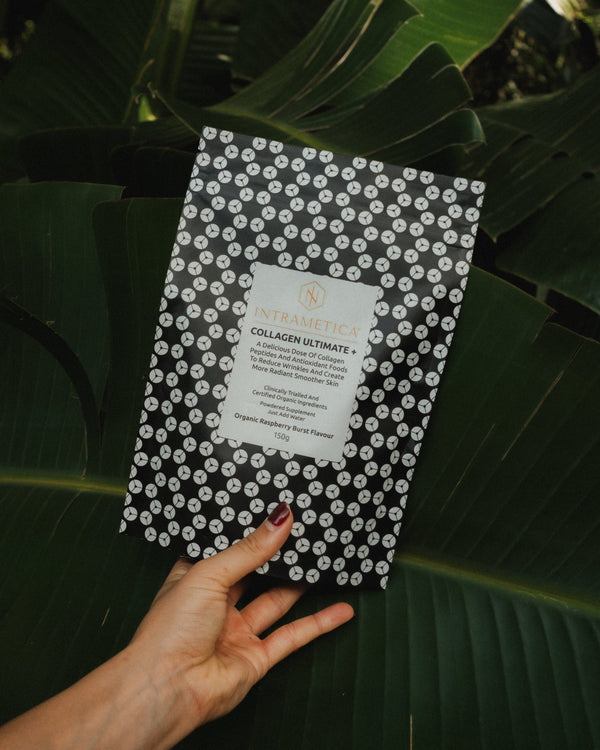
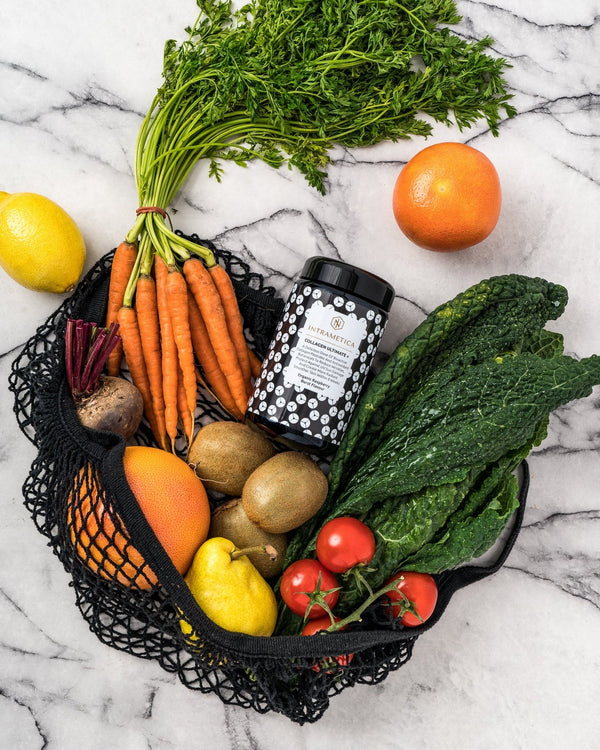
Packaging that protects potency. Clear plastic exposes the powder to light and oxygen. Miron violet glass blocks degrading wavelengths — one of the reasons Intrametica offers a Miron caddie format.
- Australian formulation. Formulated and manufactured locally to TGA standards. Imported supplements may not meet Australian labelling requirements.
What an evidence-based daily dose looks like
Across the clinical literature, the dose most commonly studied for skin outcomes is 2.5–10g of hydrolysed collagen peptides per day for 8–12 weeks. Skin elasticity gains are typically reported by week 4; collagen density improvements take 8–12 weeks (Proksch et al., 2014; Inoue et al., 2016; Sangsuwan & Asawanonda, 2021).
Practical translation: pick a product that gives you ≥2.5g per serve in one easy daily dose, and commit to 12 weeks before you judge the result. Some readers prefer to fold that daily peptide dose into a protein-and-prebiotic blend rather than a standalone collagen. If you are still weighing up whether it is worth it, we cover what the science says about whether collagen actually works. Tracking a single skin marker (a fine line, an area of pigmentation, a patch of dehydration) at the start, at week 4, week 8 and week 12 is the simplest way to evaluate. The same peptide-and-cofactor logic is why readers ask about collagen for hair, not just skin, though hair is a slower and separate story.
Where Intrametica sits
Angela formulated Collagen Ultimate+ as the supplement she wanted to be able to prescribe in clinic and couldn’t find off the shelf. Each 5g serve provides hydrolysed marine peptides at 50% of the formula, combined with a 28% superfood blend (Astaxanthin, Kakadu Plum, Camu Camu, Maqui Berry, Goji, Acerola, Baobab, Grapeseed, Lycopene), plus zinc and silica as cofactors. It is certified organic in the superfood blend, made in Australia, and available in a refill pouch or premium Miron violet glass caddie that preserves potency. A baobab-derived prebiotic fibre rounds out the formula, a nod to the gut-skin connection that supports healthy skin from within.