Why hair is harder to influence than skin
Hair grows about 1cm per month. Compared to skin — which turns over every 28 days — visible hair change is a long game. Most clinical trials on collagen and hair run for 12–24 weeks and even then report changes in hair tensile strength and breakage rate before they report length. If you start collagen today and judge it at 4 weeks, you’ll usually conclude it doesn’t work. Judge at 12 weeks and the picture is different. The same 8-to-12-week rule applies to skin, which we unpack in does collagen actually work.
What the research shows
There is a smaller research base for hair than for skin, but the studies that do exist are encouraging:
Hexsel et al. (2017): a 90-day study showed improved nail growth and strength with oral collagen peptides — relevant because nails and hair share keratin biology.
Glynis (2012): an oral marine extract (containing collagen peptides plus mucopolysaccharides) showed a significant increase in hair density at day 90 in women with thinning hair.
Le Floc’h et al. (2015): combined nutraceutical including marine extract reduced telogen-phase hair (the resting/shedding phase) and increased anagen-phase (growth) hair after 6 months.
How collagen actually helps your hair
1. Amino acid supply
Hair shafts are 90%+ keratin — a protein made from amino acids you ingest. Collagen peptides deliver high concentrations of glycine, proline and hydroxyproline, which the body uses across many connective tissues including the hair follicle.
2. Cofactor delivery (in a good formula)
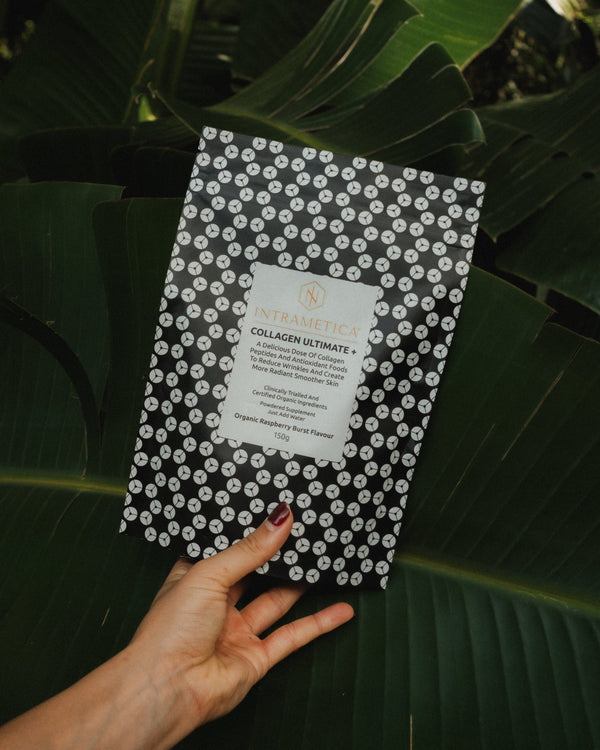
A standalone collagen powder does little if you’re short of vitamin C, zinc or silica. Collagen Ultimate+ delivers all three in the same daily serve, which is one of the reasons the formula was designed the way it was. Our marine collagen buying guide covers the cofactors worth looking for.
3. Scalp-skin support
Your scalp is skin. Improving skin elasticity and hydration improves the environment in which follicles operate. The astaxanthin and vitamin C content of Collagen Ultimate+ contributes here.
4. Anti-oxidative protection
Oxidative stress contributes to follicle miniaturisation. The 28% superfood antioxidant blend in Collagen Ultimate+ adds protective load against this.
When collagen alone won’t fix it
Hair loss has many drivers. Before relying on a supplement, screen for these:
Iron / ferritin deficiency. A serum ferritin below 50 ng/mL is associated with diffuse hair loss in women. Test with your GP.
Thyroid dysfunction. Both hypo- and hyperthyroidism affect hair. TSH alone is not enough — request full thyroid panel.
Post-partum and post-illness shedding. Telogen effluvium 3–6 months after a stressor is common and self-limiting.
Androgenetic / hormonal hair loss. Pattern thinning, particularly along the central parting, may need a clinical workup.
How to take collagen for hair
Dose: 5g daily (one rounded teaspoon Collagen Ultimate+).
Timing: anytime, with or without food. Many people add it to a morning smoothie or a glass of juice.
Consistency: 12 weeks minimum before judging. Daily without skipping is the lever.
Stack: a high-protein diet (1.2g/kg+ per day), good iron status, zinc and vitamin D adequacy. A naturopath can help you build the stack.
Because hair is a slow, 12-week commitment, the simplest way to stay consistent is a Collagen Ultimate+ Subscribe & Save plan, so a fresh pouch always arrives before you run out.